This article describes how the Keycloak user database can be connected to DualShield as an external user directory, in the same way that Active Directory is connected to DualShield.
Keycloak stores its user directory in a SQL database, and it allows customers to choose one of the commonly used SQL servers, such as Postgres or MySQL, etc. However, Keycloak uses a proprietary database structure to store its user directory. In order to connect the Keycloak user database to DualShield, we need an adapter or converter. As DualShield supports LDAP, we developed a SQL to LDAP converter called DualShield MyVD which is based on an open-source project called MyVD.
How it Works
In DualShield a user directory is called a domain, whereas in Keycloak a user directory is called a realm. We will map a realm in Keycloak to a domain in DualShield. As Keycloak does not have the concept of the domain and OU, we will first map a realm in Keycloak to an OU in LDAP, then map the OU to a domain in DualShield
| Keycloak | LDAP | DualShield | ||
|---|---|---|---|---|
| Realm | >> | OU | >> | Domain |
By using OU, we can also support multiple realms in Keycloak. Any realm in Keycloak can be mapped to a domain in DualShield via an OU in LDAP.
Please note that in DualShield there is a component call realm as well. However, a realm in DualShield is a group of domains, instead of a single domain.
Install DualShield MyVD
| Component | Description |
|---|---|
| Hardware |
|
| Software | Windows
Linux
|
The article describes how to install DualShield VD on a Windows server.
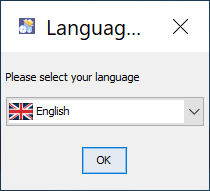
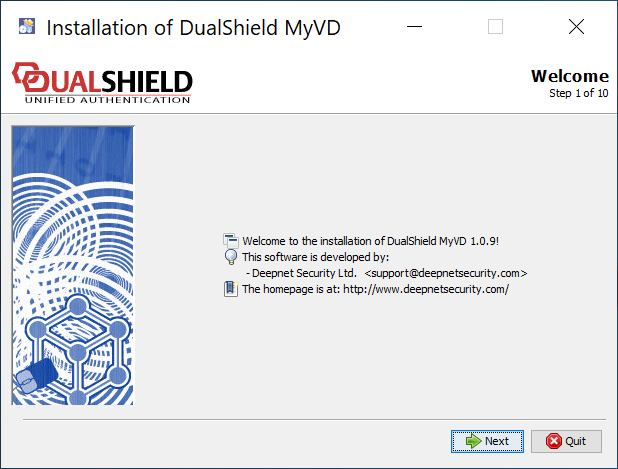
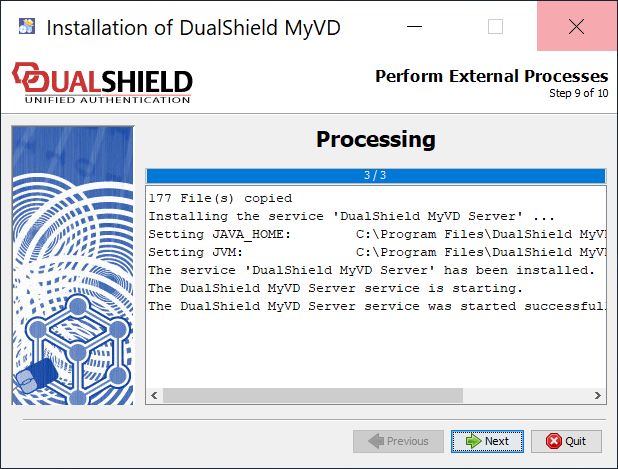
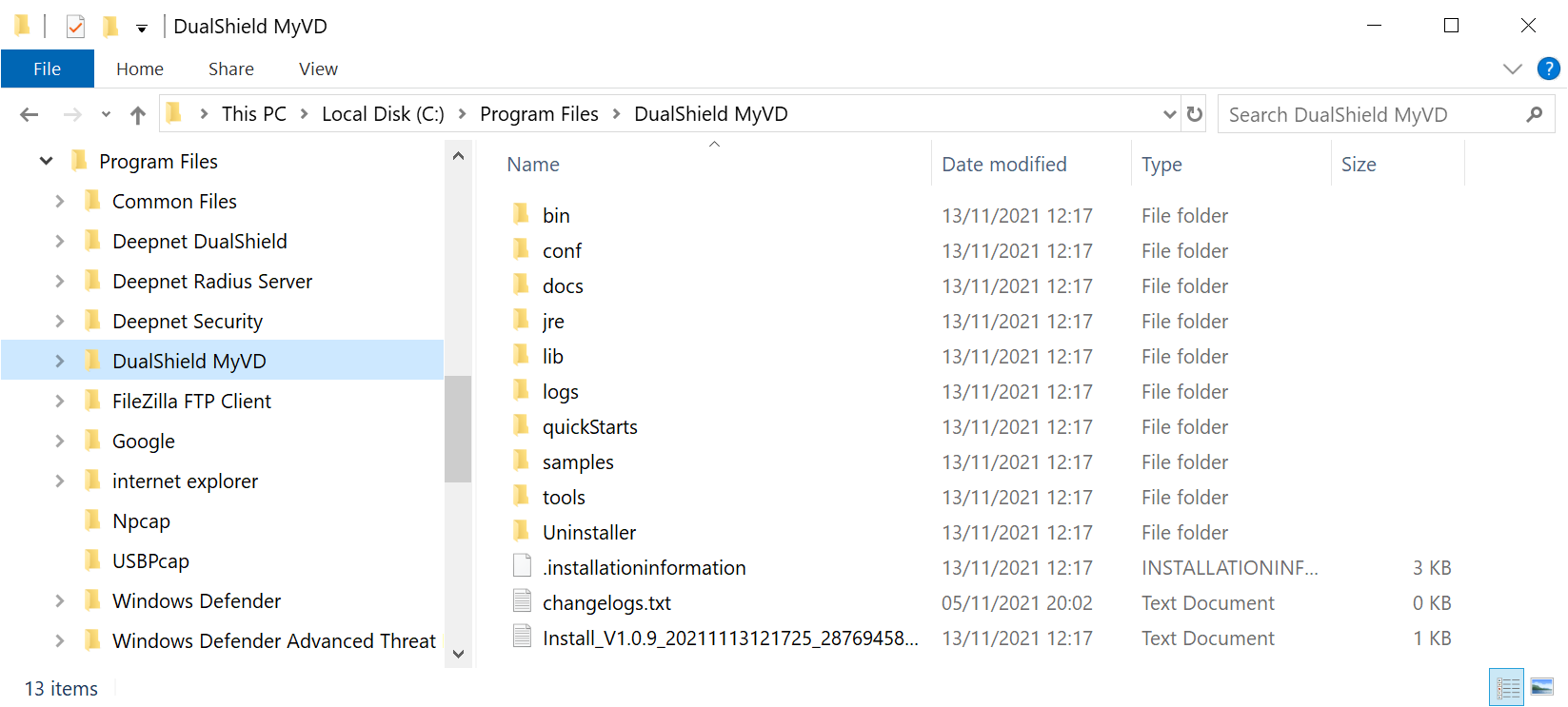
To install DualShield MyVD, launch its installer "setup-dualshield-myvd-xxxx.yyyy.exe", where xxxx.yyyy is its version and build number.
| |||||||||||||||
| |||||||||||||||
| |||||||||||||||
| |||||||||||||||
| |||||||||||||||
| MyVD Port Number ____________________________________________________________________ Enter the port number that MyVD will be using as its working port You can simply accept the default port number 10983 unless this port is not available. | ||||||||||||||
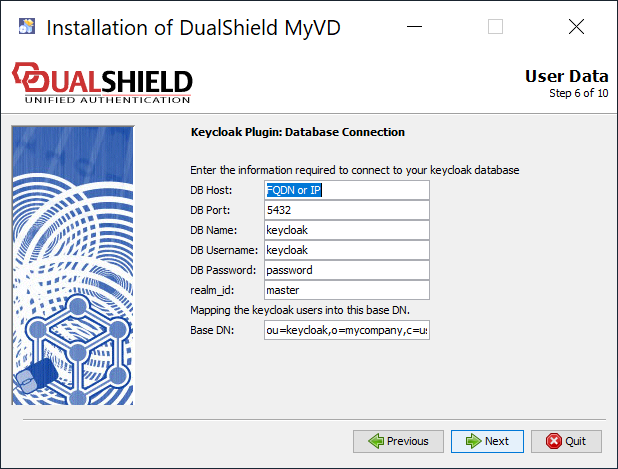
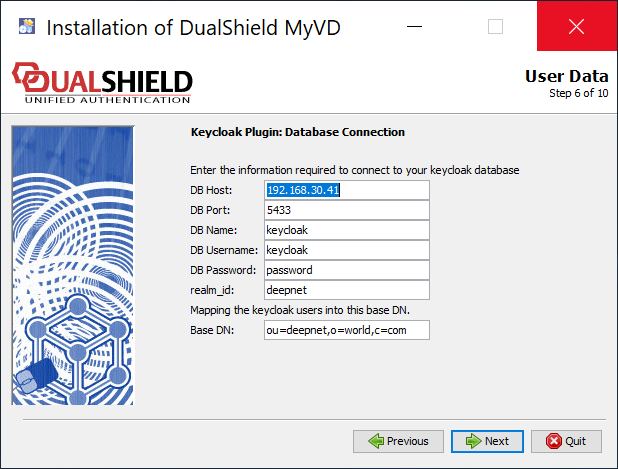
| Keycloak Database Connection ____________________________________________________________________ Provide the details below in order to make the connection to your Keycloak database and one of the realms
| ||||||||||||||
| |||||||||||||||
| |||||||||||||||
| |||||||||||||||
| |||||||||||||||
|