The purpose of this task is to remove all tokens from the token repository of a specific product that have been assigned to users in a specific domain (optionally, token deletion can be further restricted to inactive tokens).
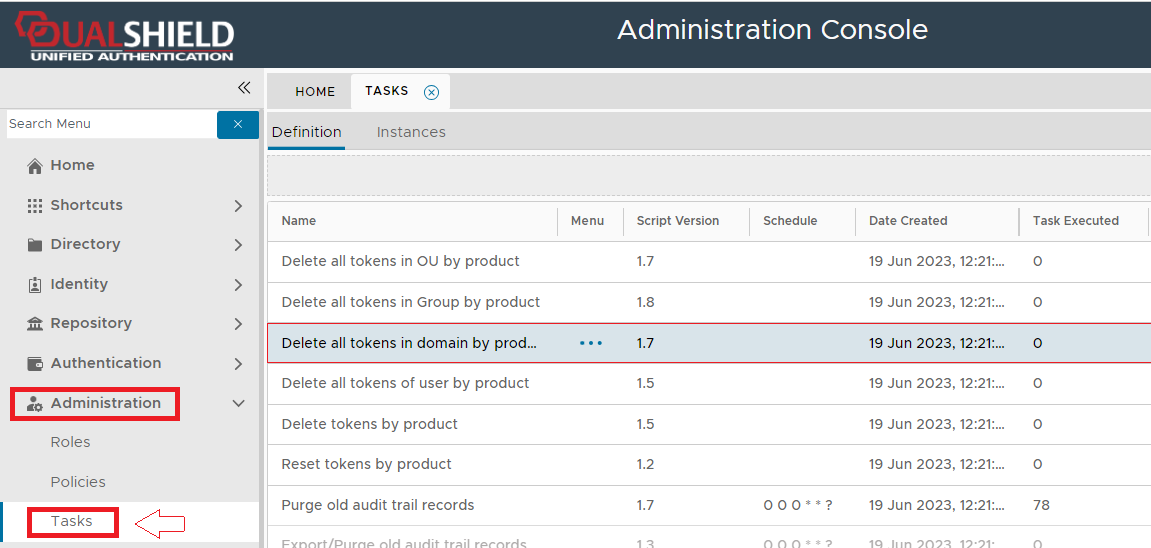
The task can be found by navigating to "Administration | Tasks", then scrolling down to the task "Delete all tokens in domain by product";
Task Parameters
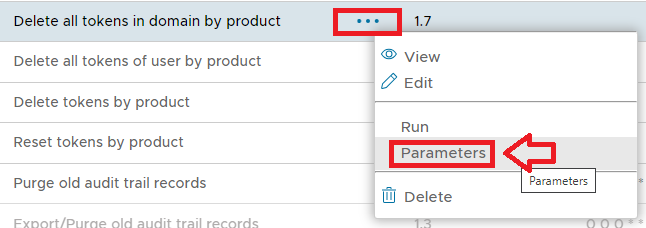
The task parameters are used by the task script to determine which tokens are to be deleted and are edited by left clicking on the context menu of the task and selecting "Parameters";
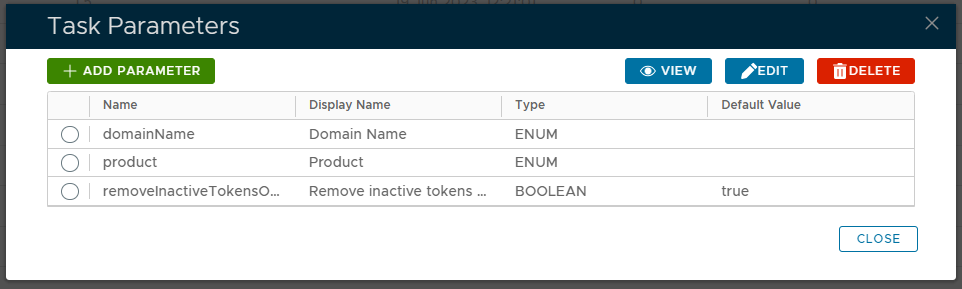
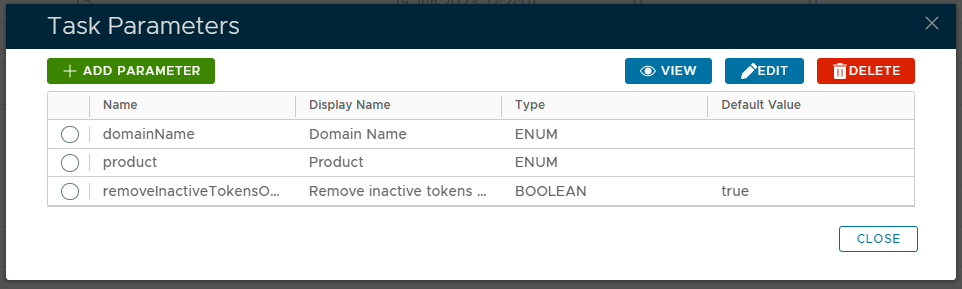
A new window titled "Task Parameters" will now open that lists the parameters making them available for editing, and the default parameters for this task are as follows;
Specify the domain that assigned users of the tokens must be members of if the tokens are to be deleted by the task.
Specifies the Product Code of the tokens to be deleted.
Specifies if only inactive tokens are to be deleted when the task is run.
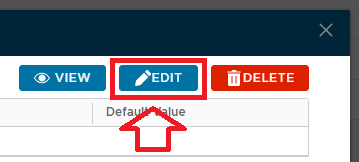
The parameters may then be editing by selecting one of the parameters, then clicking on the button.
Most task have will have a number of task parameters, and it is obligatory for all the parameters to be supplied before the tasks are run (either manually, or via automatic scheduling).
Some of these parameters will have default values, but others (such as domain name) will need to be supplied (and without these values the task will probably fail).
To access the task parameters left click on the context menu of the task then select "Parameters";
A new window titled "Task Parameters" will now open that lists the parameters that have been created for this task (see example below);
Specify the domain that assigned users of the tokens must be members of if the tokens are to be deleted by the task.
Specifies the Product Code of the tokens to be deleted.
Specifies if only inactive tokens are to be deleted when the task is run.
In the top right hand corner of this window are the buttons that all viewing, editing and deletion of task parameters;
To edit one of the listed parameters first select the parameter to be edited then click on the button.
A new window will now open that will allow you to edit the parameter (example below);
In most cases the only value that should be changed is the "Default Value" setting.
If the default value is updated, and the button is pressed, then this new value will be used by the task script next time the task is run.
Editing and Scheduling the Task
Viewing and Editing the task
The task can be edited by left clicking on the context menu of the task and selecting"Edit";
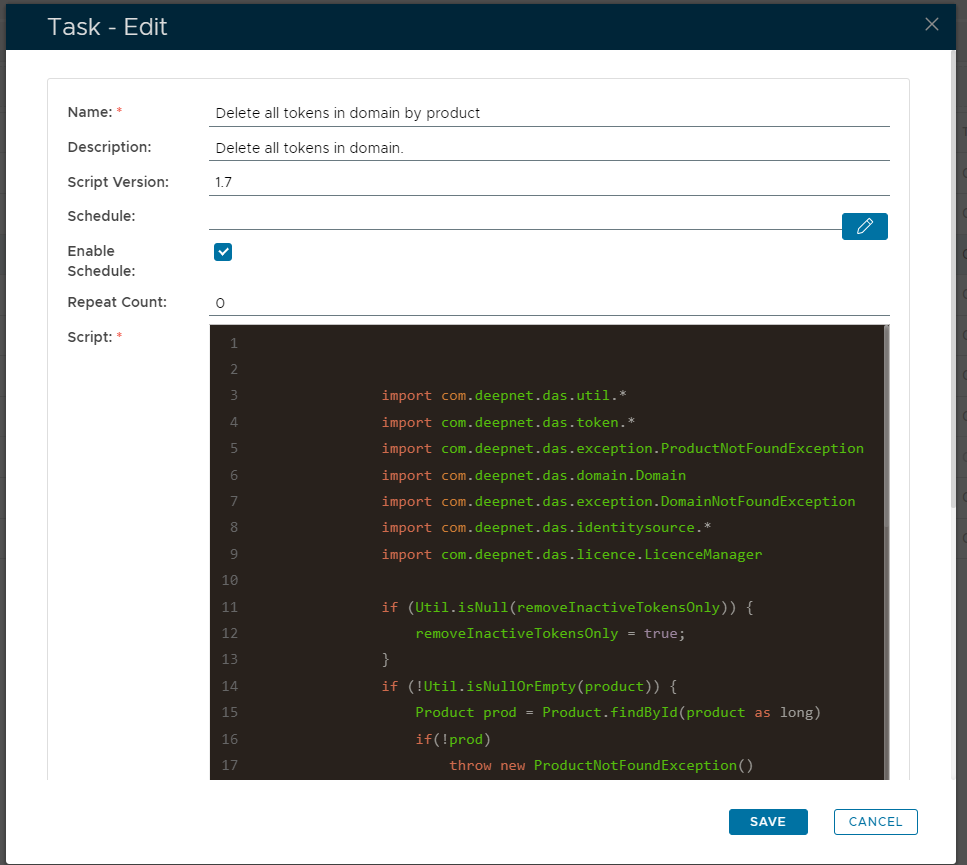
A new window will now open titled "Task - Edit";
Enter the name to be assigned to the task within the management console.
Enter a description of what the task will do.
The version number of the task.
This field is used to specify when the task is scheduled to execute;
(see "Scheduling the Task Execution Time and Frequency [MC-TKTD]" in the Related Articles section below).
This field will determine if the task schedule is enabled (if enabled the task will execute at the scheduled time).
Specifies how many times the task should be repeated after the task is executed.
Group findGroupFromDomain(Domain domain, String groupName) { if (domain.identitySource.type == IdentitySourceType.SQL) { return Group.findByDomainAndName(domain, groupName) } else if (domain.identitySource.type == IdentitySourceType.LDAP) { def list = LdapGroup.searchInLdap(domain, [["name", "=", groupName]]) if (!list || !list.rows) return null return list.rows.get(0) } }
Scheduling the Task
Select the "Enable Schedule" checkbox to ensure the task schedule is activated, then use the pencil icon ("") to specify the time and frequency settings for automated task execution.
Tasks can be scheduled for automatic execution by selecting the "Schedule Enable" option then clicking on the icon;
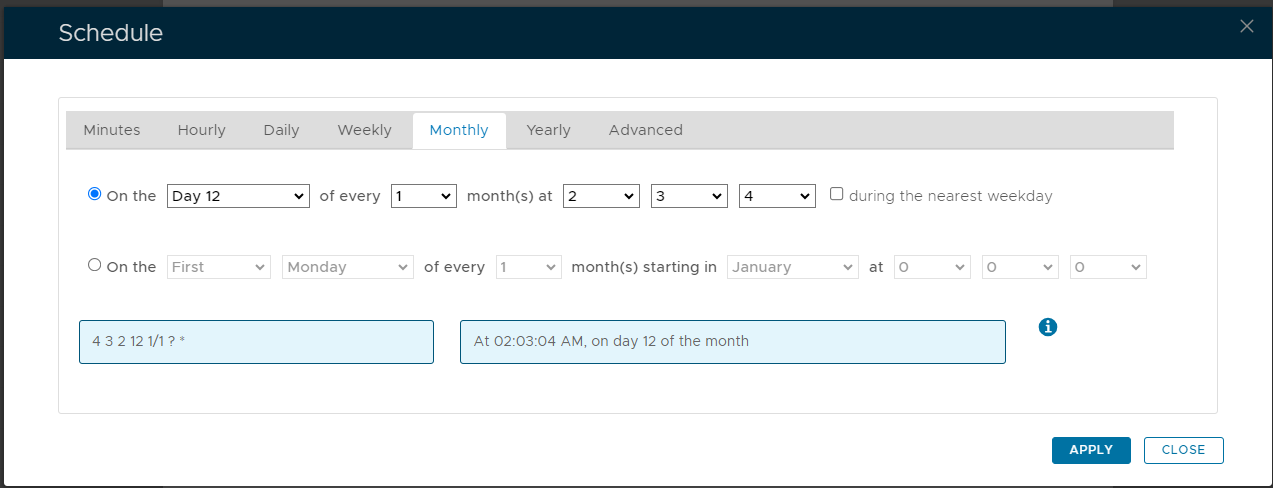
When the is pressed a window will open titled "Schedule" that can be used to specify the when the report is scheduled to run;
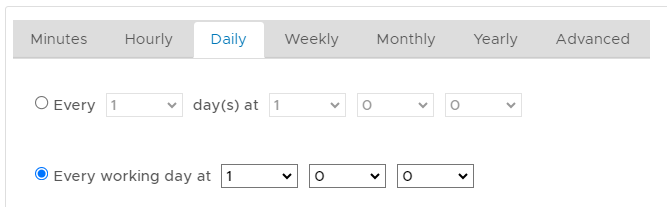
As an example, we can schedule the report to run at 1am every weekday using the following settings;
After clicking on the schedule details will be converted into text form and added against the report parameter "Schedule";
In addition to scheduling when the task is to be run you may need to Edit the task parameters and ensure that all required parameters have been supplied (some tasks have parameters with no default value and until a value is supplied the task will fail if run manually or automatically scheduled).
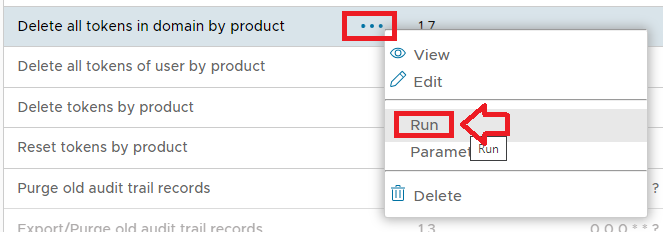
The task can be run manually from the management console by left click on the context menu of the task, then selecting "Run";
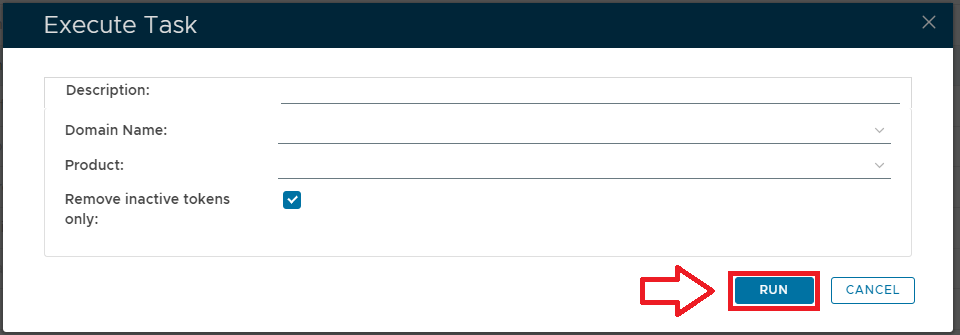
A new window headed "Execute Task" will now open allowing you to edit the task parameters prior to running the task;
Provide a brief description that will be used to describe the purpose of the task in the audit log.
Specify the domain that assigned users of the tokens must be members of if the tokens are to be deleted by the task.
If specified, this property will restrict token deletion to tokens that have the specified Product Code.
If selected on tokens that are inactive and meet the other criteria will be deleted.
To execute the task click the button.
n addition to scheduling when the task is to be run you may need to Edit the task parameters to ensure that all the parameters for this task have been supplied as running the task without all the required parameters will cause the task to fail.
 button.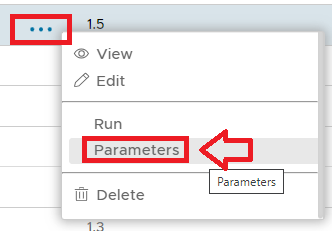
 button.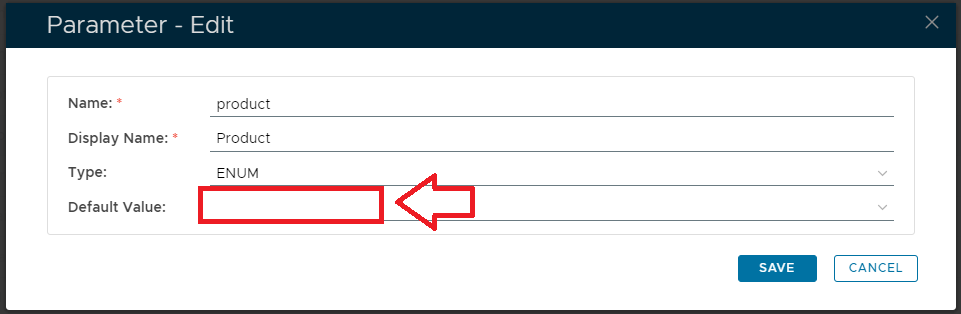
 button is pressed, then this new value will be used by the task script next time the task is run.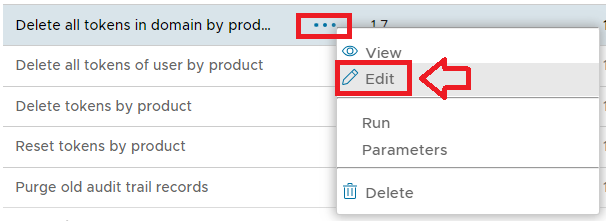
 ") to specify the time and frequency settings for automated task execution.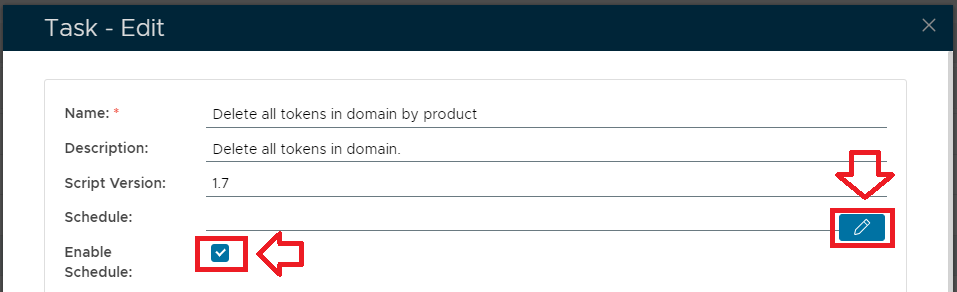
 icon;
icon;
 the schedule details will be converted into text form and added against the report parameter "Schedule";
 button.