There may be a requirement to protect a PC that is not joined to the domain or even connected to the same network. We have a solution for this. It is fairly easy to set up, but there are a few extra prerequisites needed in order to get this working
Prerequisites
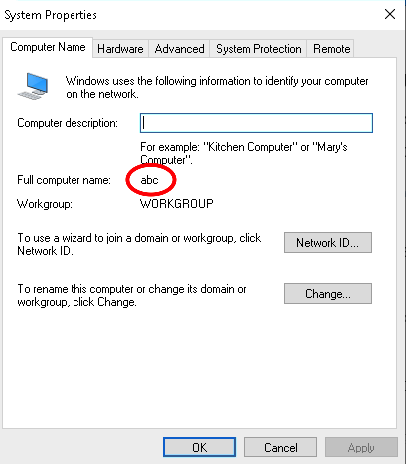
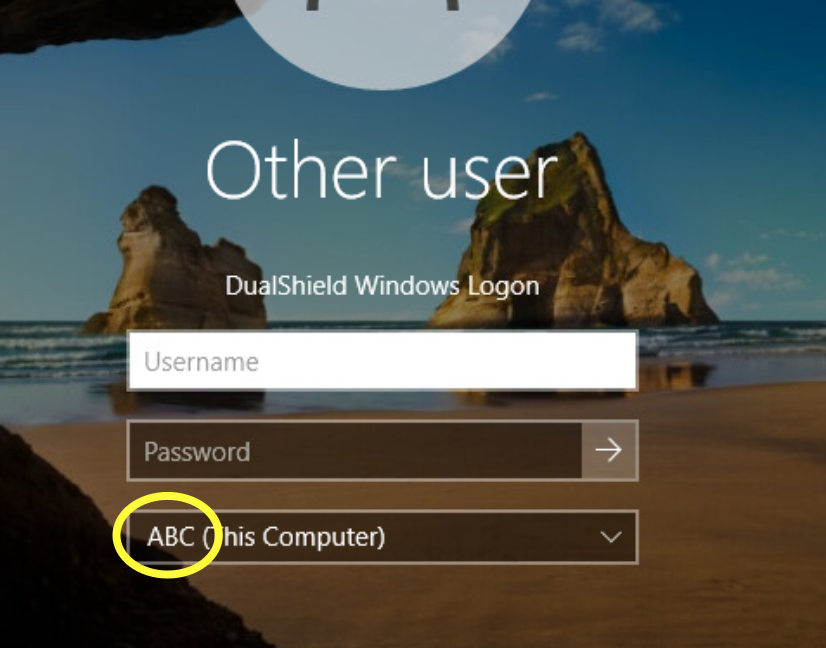
Make a note of the host name of the computer. In this case it is 'ABC' |
|
Create some local user accounts and make sure the Administrator account is active.
|
|
Create a Virtual Domain (This is required as the Stand-alone machines' host name will act as it's own domain.)
Login to the DualShield Administration Console and go to Identity>Identity Sources Click on  on the top right. on the top right. It is recommended to specify the hostname of the Non-Domain joined machine as the friendly name of this identity source. Also, make sure the Type is set to SQL Click Finish |
|
Go to Directory>Domains Click on on the top right. In the 'Domain-New' Dialogue box, select the Identity Source that you have just created from the drop-down It is recommended to match the Name, DNS Name and NetBIOS Name with the hostname of the Stand-alone machine Click Save |
|
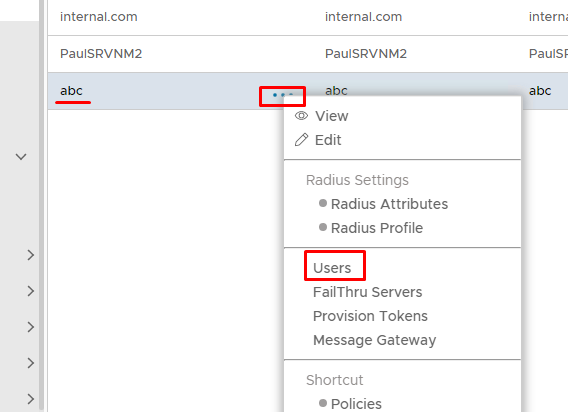
The Virtual domain will now be listed under Domains. Click on the corresponding ellipses ad select Users from the menu |
|
Create an Application
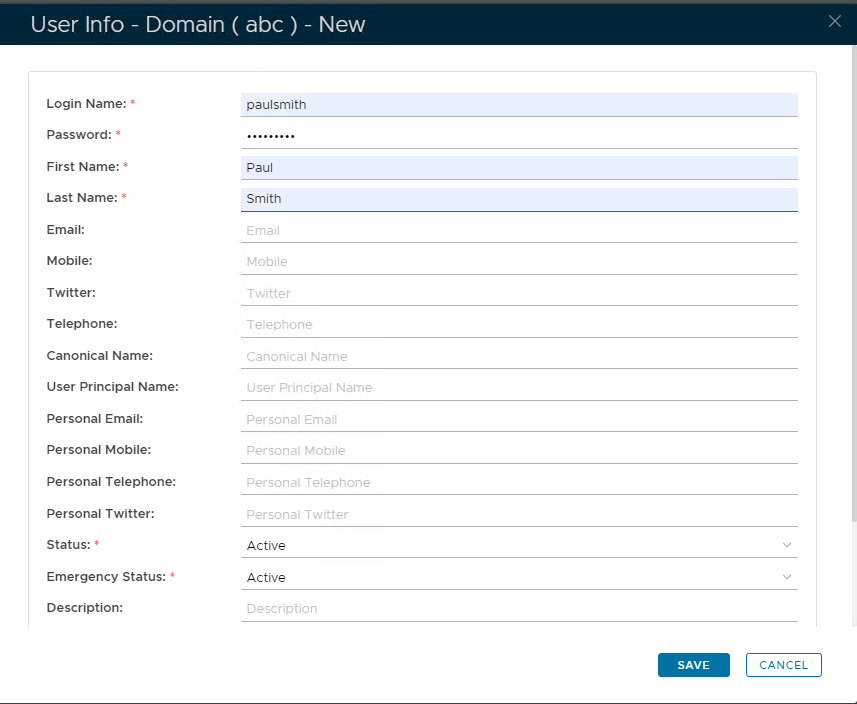
You will now need to create Virtual user accounts that match the local user accounts on the PC Click on on the top right. Make sure the account details match including the password. Click Save
|
|
Click on on the top right.
In the new Application window, please enter the following information: | Option | Value |
|---|
| Name: | Enter a friendly name | | Realm: | Select your Realm | | Logon Procedure: | Select the Logon Procedure you had created in the previous step |
Click: Save |
|
Bind the Application to an SSO Server Agent
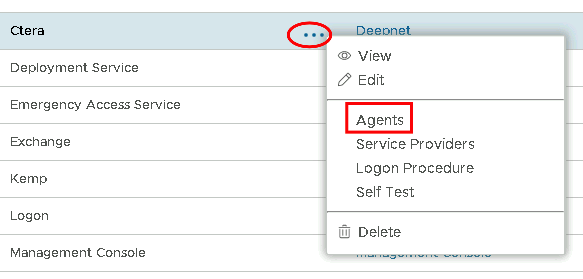
Select the drop down menu corresponding to the Application you will be using and click on Agents. |
|
Tick the box of the SSO Server you will be using and click Save below. |
|
Create a Service Provider Profile
Go to SSO>Service Providers |
|
Click on on the top right.
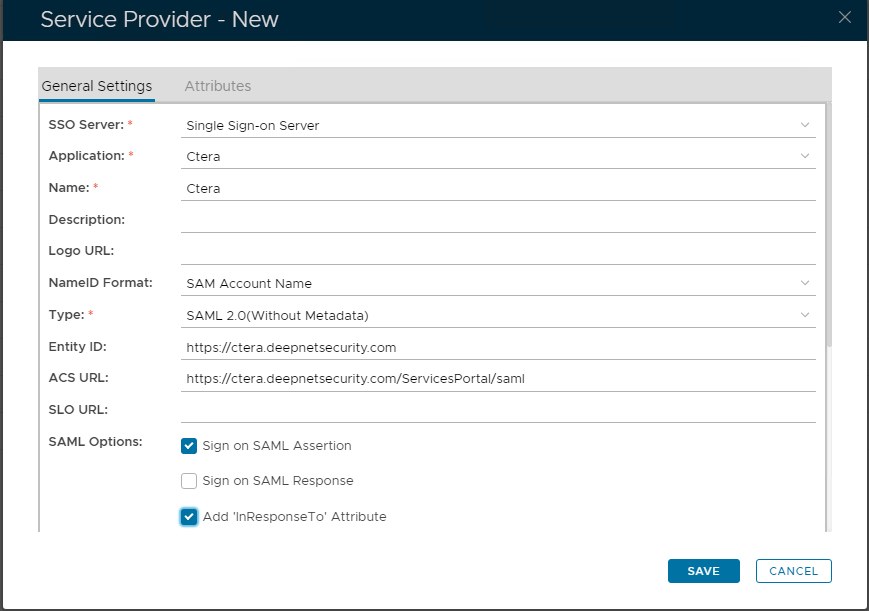
Fill in the details as per screenshot on right and make sure you select SAML 2.0(Without Metadata) as Type. |
|
Now fill out Entity ID and ACS URL. | Option | Value |
|---|
| Entity ID: | | | ACS URL: | |
|
|
The completed Service Provider dialogue box will look like this: |
|
Click Save.
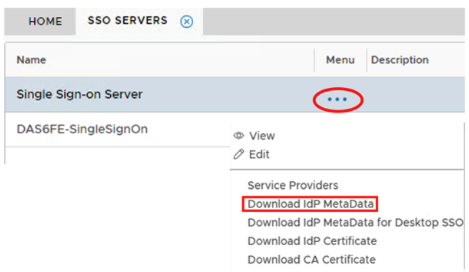
Download the IDP Metadata file.
Select the drop down menu corresponding to the SSO server you will be using and click on Download IDP Metadata. |
|