Follow the steps below to prepare the configuration files for Entra-joined PCs.
The Deepnet Computer Logon Modern Authentication requires a custom configuration file in order to function correctly for the users. You must customise the configuration file with your own data.
Open the config.json in a text editor, such as Notepad
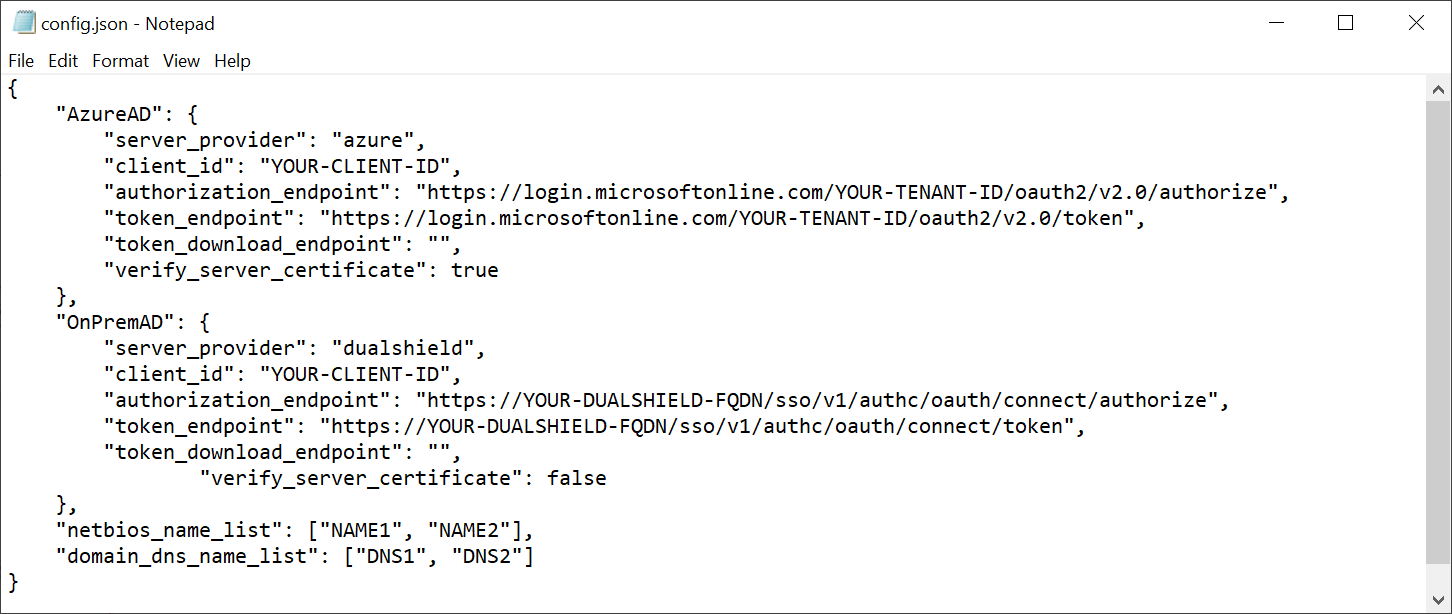
The Deepnet Computer Logon Modern Authentication supports both Azure AD (Entra ID) joined PCs and On-Prem AD joined PCs. The block "Azure AD" includes MFA server settings for Azure AD, and the block "OnPremAD" includes MFA server settings for On-Prem AD.
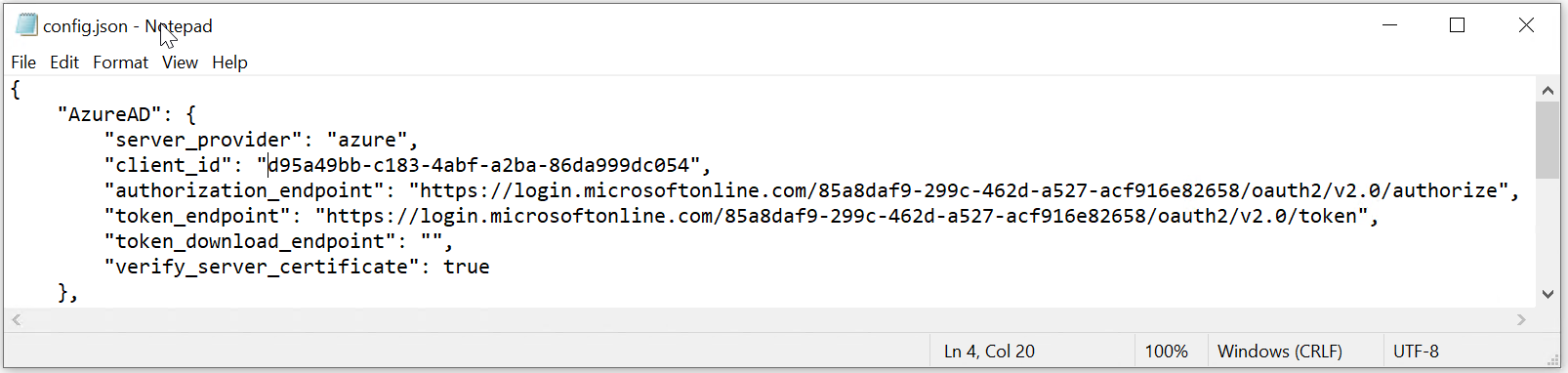
If you have PCs that are joined to the Azure AD, then you need to change "YOUR-CLIENT-ID" and "YOUR-TENANT-ID" in the "AzureAD" data block.
We assume that for Azure AD joined PCs, you will use Azure MFA to authenticate users when the PC is connected to the internet.
If the application you set up for Computer Logon with MFA supports a single tenant only
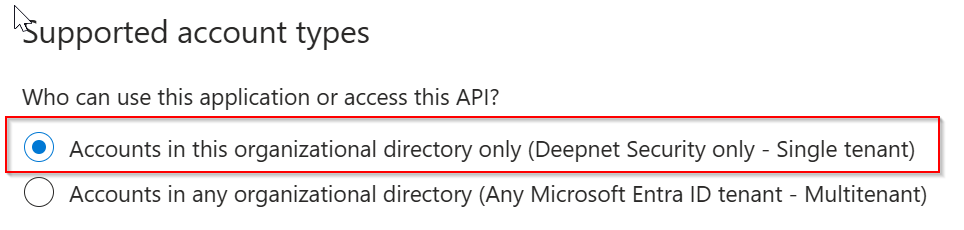
Then, in the "AzureAD" block, replace "YOUR-TENANT-ID" in the configuration file with your Tenant ID in the Entra ID.
However, if the application you set up for Computer Logon with MFA supports multitenant
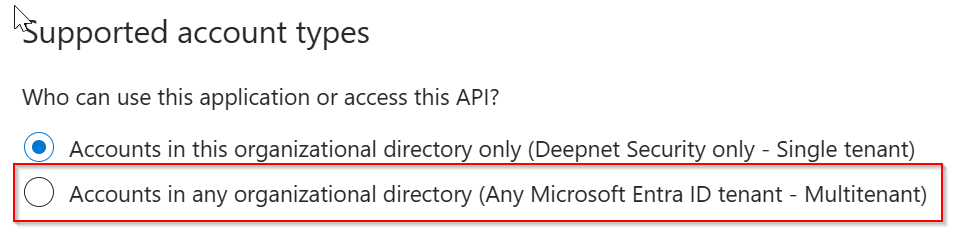
Then, in the "AzureAD" block, replace "YOUR-TENANT-ID" in the configuration file with the word "common"
Next, replace "YOUR-CLIENT-ID" with the "Application (client) ID" of the application that you have set up for Computer Logon.
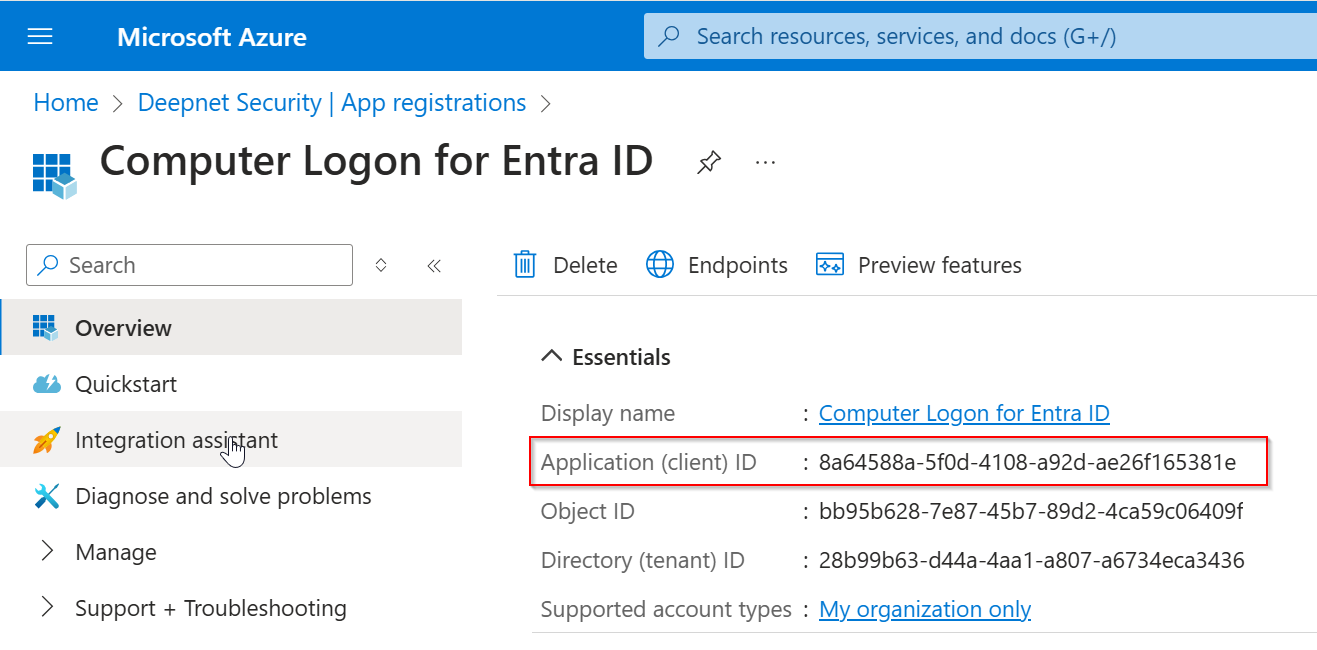
Below is an example:
If you have PCs that are joined to the On-Prem AD or hybrid joined, then you need to change "YOUR-CLIENT-ID" and "YOUR-DUALSHIELD-FQDN" in the "OnPremAD" data block.
We assume that for On-Prem AD joined PCs, you will use DualShield MFA to authenticate users when the PC is connected to the network.
Next, you need to add the list of NetBIOS names and domain DNS names used in your organisation. The Computer Logon solution utilizes NetBIOS names and domain DNS names to differentiate between personal and business accounts.
If you only need to implement Computer Logon MFA for Azure AD, then you do not need to add NetBIOS names.

Save the configuration file.
Computer Logon for Entra ID supports many MFA scenarios, including
For each scenario, it provides a separate set of options that allow you to control whether or not MFA is required, and the frequency of MFA requirement etc.
Those options are in the "domain_policy.json" file.
|
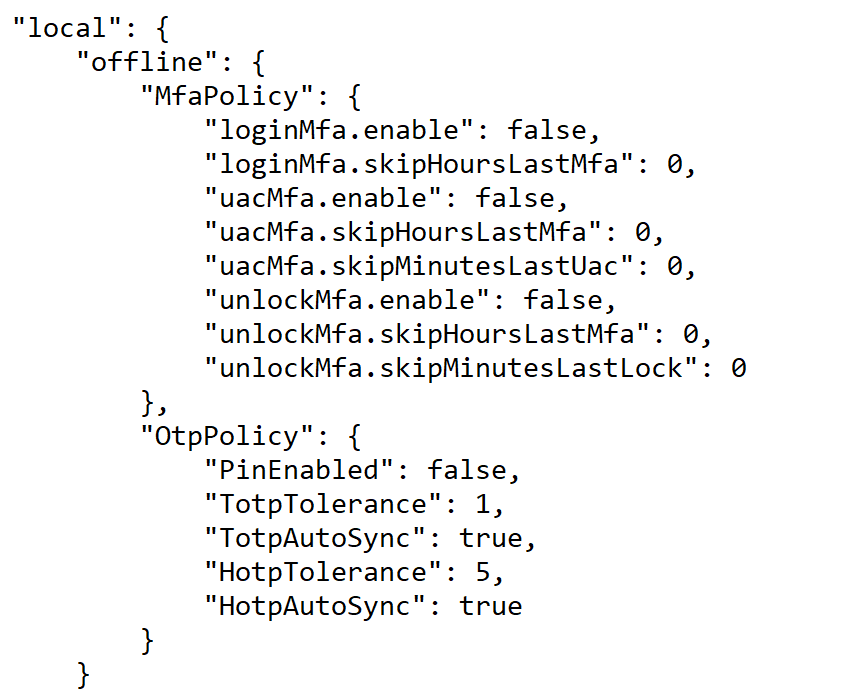
Options for Local Users
| online | offline | |
|---|---|---|
| bootup login | local\offline\MfaPolicy\loginMfa | |
| screen unlock | local\offline\MfaPolicy\unlockMfa | |
| elevated access | local\offline\MfaPolicy\uacMfa |
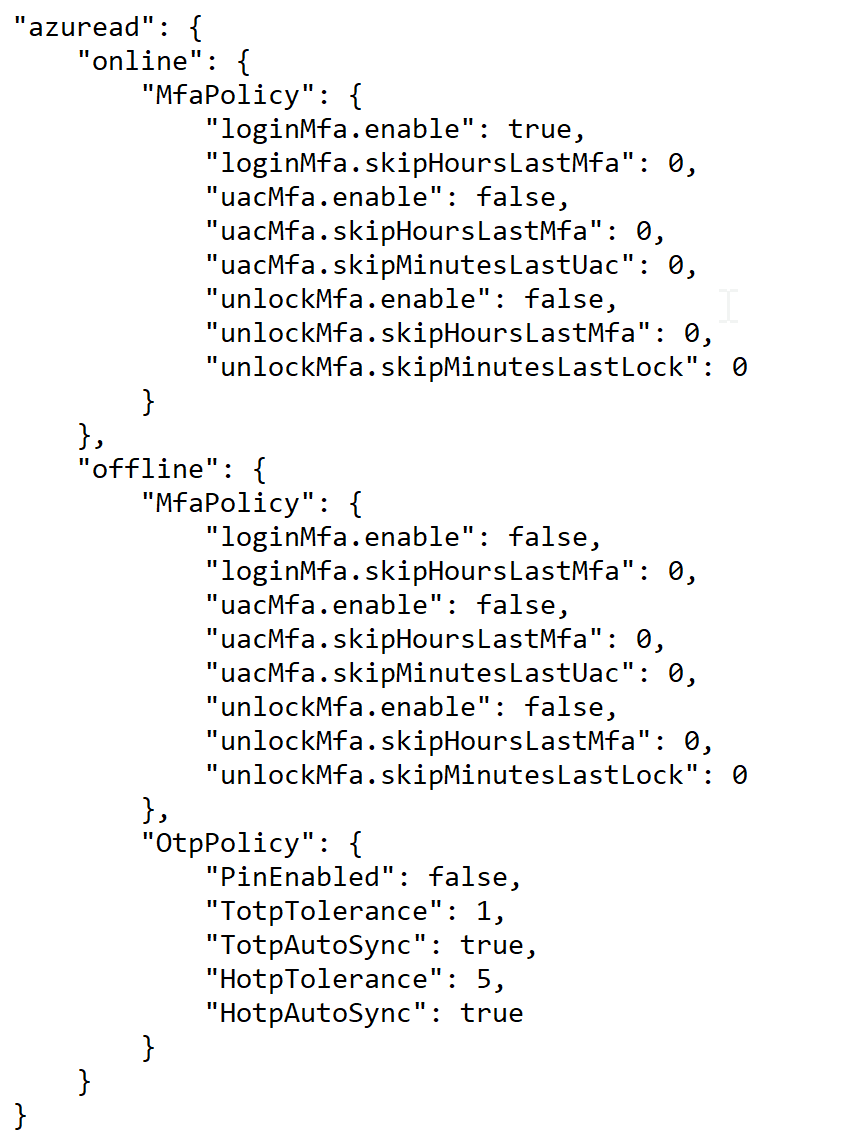
Options for Domain Users
| online | offline | |
|---|---|---|
| bootup login | azuread\online\MfaPolicy\loginMfa | azuread\offline\MfaPolicy\loginMfa |
| screen unlock | azuread\online\MfaPolicy\unlockMfa | azuread\offline\MfaPolicy\unlockMfa |
| elevated access | azuread\online\MfaPolicy\uacMfa | azuread\offline\MfaPolicy\uacMfa |
If you wish to customise some of those options, then you need to edit the "domain_policy.json" file in a text editor and change the corresponding options.
For instances