
Users in DualShield have attributes such as the name of the domain they belong to, or the groups they are members of, etc. Below is a list of commonly used user attributes:
For example, to map the RADIUS attribute IETF/User-Name to a user's login name:
Group name is slightly more complicated. However. A user may be a member of more than one group, therefore the attribute "groups.name" will return an array of group names.
If you just want the name of the first group, then it is:
groups[0].name
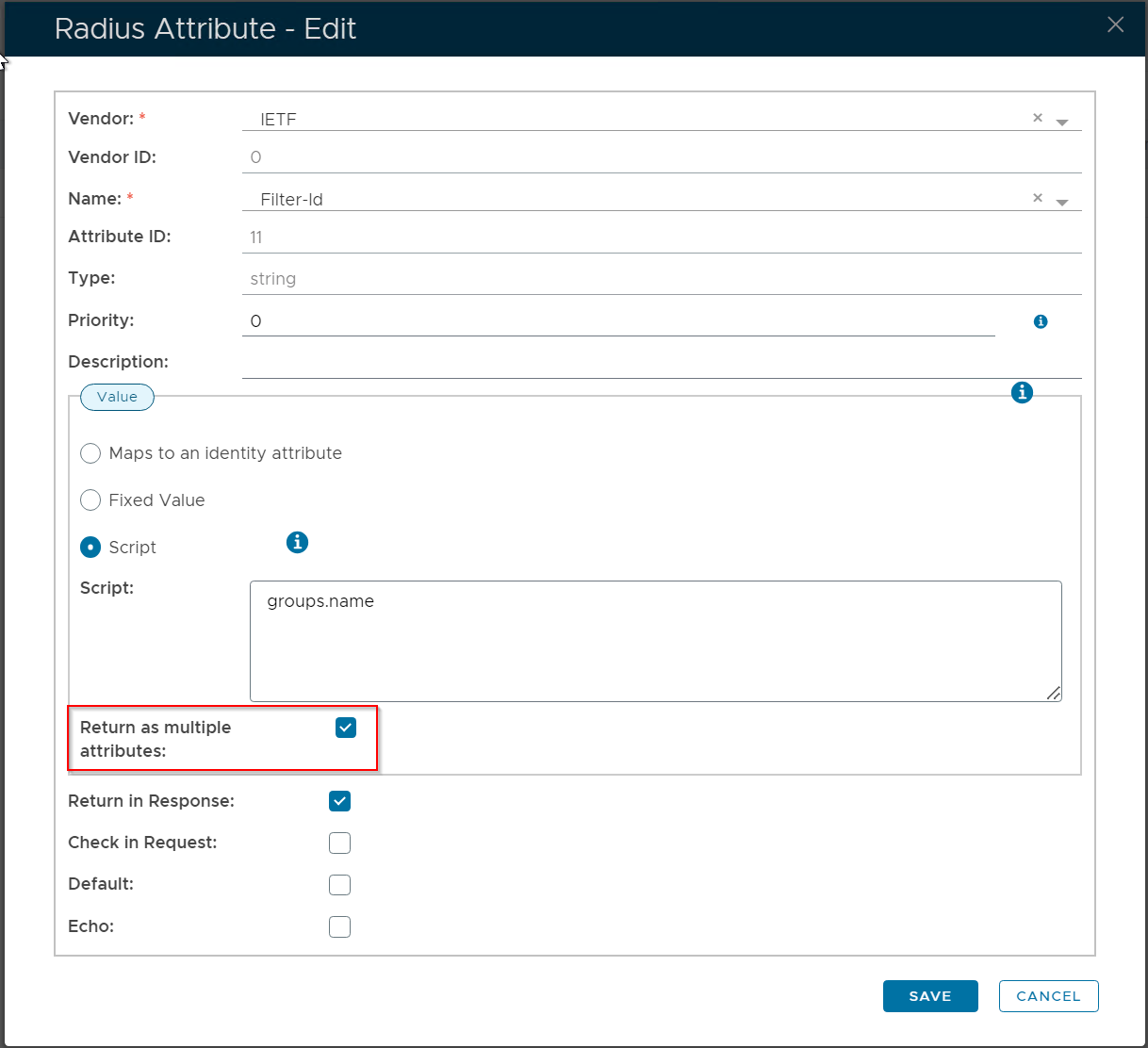
If you want to return a specific group name, then you must map a RADIUS attribute, e.g. Filter-Id to the script below:
nestedGroups.find{it.radiusAttributes.any{ att-> att.name=='Filter-Id'}}.name
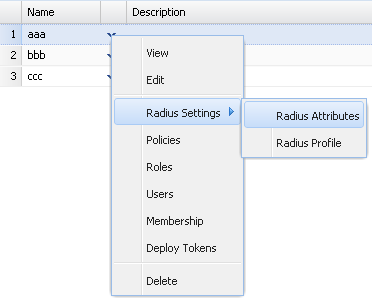
Then you must also assign the RADIUS attribute to the group, e.g. 'aaa'
If you need DualShield to return a list of names as a comma separated values then you need to use the "join" function:
groups.name.join(',')
If you need DualShield to return a list of names as an array of individual names, then you must select the option "Return as multiple attributes"
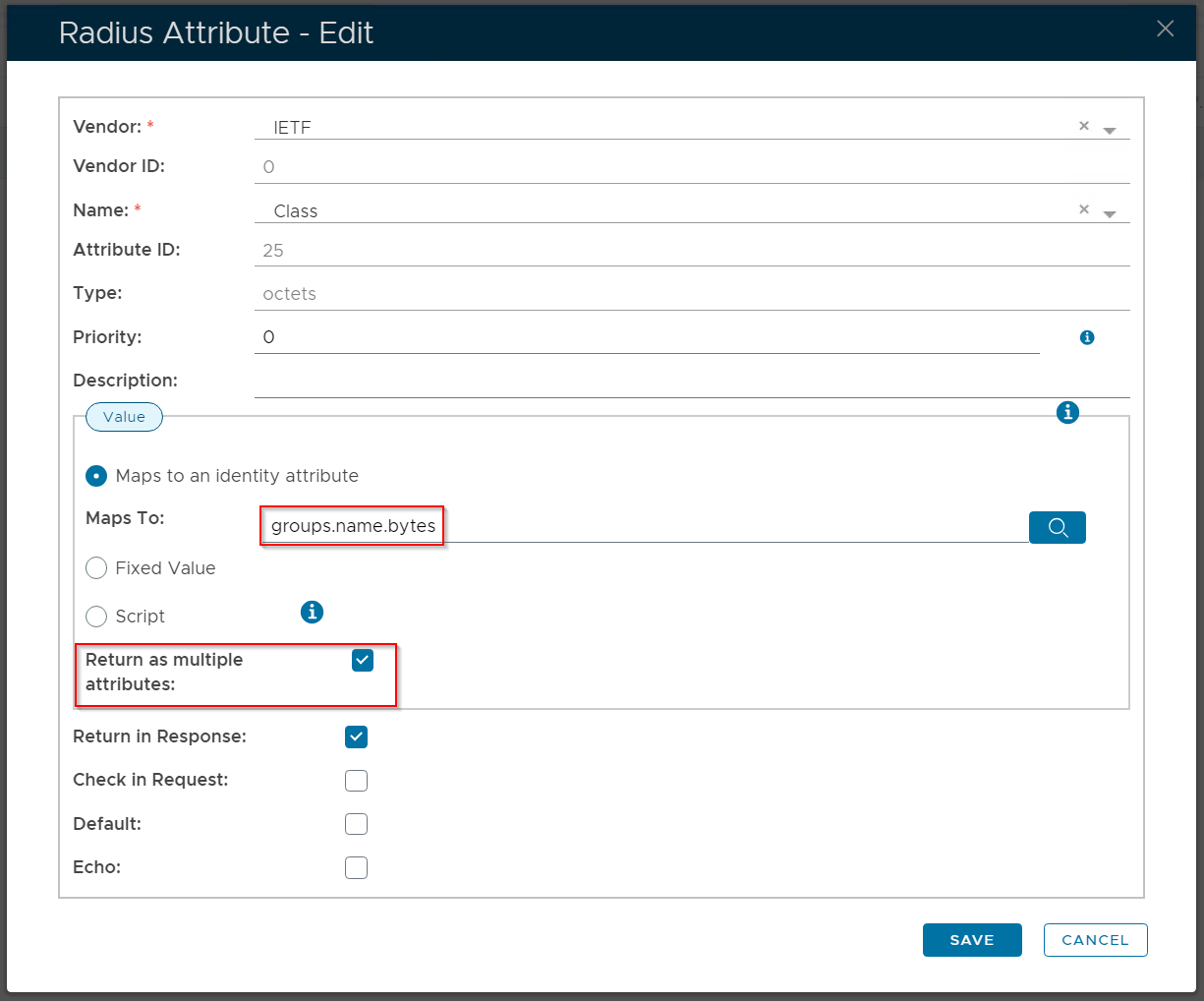
The RADIUS attribute "class" has the data type called "octets" which means a byte array. In DualShield, you must use the hexadecimal value of the data or use the "bytes" function:
There are several other RADIUS attributes that are defined as "octets" Please refer to:
http://opensource.apple.com/source/freeradius/freeradius-11/freeradius/share/dictionary.rfc2865